Unit 3.3. Water Law
Instructor: Dr. Marirajan Thiruppathi
Associate Instructor: Dr. Nusrat Yaqoob
Recap of session “3.2. Water Governance Indicator Framework”, this session discussed Water governance indicators assess institutional, regulatory, economic, environmental, and participatory aspects, ensuring accountability and sustainability. Case studies highlight diverse governance models and best practices.
In today’s session 3.3, “Water Law and Policy”, plays a crucial role in ensuring the equitable distribution, sustainable management, and legal governance of water resources. This session will provide an in-depth exploration of key legal principles and strategic policies governing water use, ownership, allocation, and environmental protection. Through an expert panel discussion featuring Mr. Johnson from the Palaru Protection Committee, participants will gain insights into contemporary challenges, legal frameworks, and practical solutions in the water sector.
By the end of this unit, participants will be able to analyze legal principles and policies governing water rights, assess regulatory frameworks, and apply sustainable solutions to water management challenges.
Lecturer: Mr. A.P. Mayandi
Lecture Topic: Participatory Tank Modernization and Sustainable Water Management: Insights from India
Recorded Video: https://youtu.be/NTj8-bkTWak
PPT File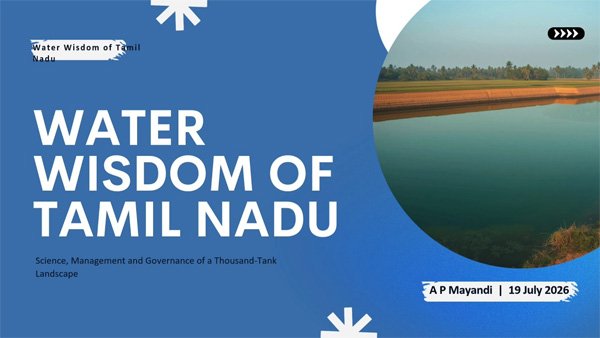
3.3.1 Water Law
Water law refers to the legal principles governing water rights and usage, ensuring equitable distribution and sustainable management of water resources. These laws vary by jurisdiction but generally cover ownership, allocation, environmental protections, and conflict resolution. Effective water laws help mitigate disputes, protect ecosystems, and balance competing needs among agriculture, industry, and domestic use.
3.3.1.1. Key Elements of Water Law
a. Riparian Rights
Riparian rights grant landowners adjacent to water bodies the right to use water for domestic and agricultural purposes. These rights are common in regions with an abundant water supply, such as the eastern United States and parts of Europe. However, riparian rights require "reasonable use", meaning that a landowner cannot exploit water resources in a way that significantly harms downstream users or the environment. Riparian rights have traditionally been rooted in common law principles and are often regulated by state or national authorities. While common in Europe, this doctrine is also firmly established in Asia. For example, in India, although water is a state subject, traditional common law principles often recognize the rights of riparian landowners to the "natural flow" of a stream for "extraordinary" use, provided it does not interfere with others. Similarly, the Thai Civil and Commercial Code (Section 1355) recognizes riparian rights, allowing owners of land abutting water to use it for their needs.
Note: Riparian rights require "reasonable use", meaning a landowner cannot exploit resources in a way that significantly harms downstream users or the aquatic ecosystem.
b. Prior Appropriation Doctrine
This principle, widely applied in arid regions such as the western United States, follows a "First in time, first in right" approach. It grants water rights to the first user who diverts and uses water for a beneficial purpose, regardless of land proximity to the source. This system emerged during the 19th century to support agriculture and settlement in regions where water was scarce. However, it can sometimes lead to conflicts between senior and junior water rights holders, particularly during droughts. Commonly applied in arid regions, this principle follows the "First in time, first in right" approach. Instead of land proximity, it grants rights to the first user who puts the water to "beneficial use". In South Africa, historical water laws (before 1998) were heavily influenced by appropriation and riparianism to support mining and large-scale farming. Whereas, in parts of the Middle East and Central Asia, traditional "First Use" rules were historically applied to canal systems and Karez (underground aqueducts) to ensure that those who invested the labor to divert water first were protected from later settlers upstream.
c. Public Trust Doctrine
The Public Trust Doctrine asserts that water resources are held in trust by the government for public benefit. Governments are responsible for ensuring water availability for ecological sustainability, navigation, recreation, and general public use. This doctrine is particularly relevant in environmental protection and conservation laws. The principle has been widely recognized in U.S. law, as well as in international legal frameworks. The Public Trust Doctrine asserts that water resources are held in trust by the government for the public benefit. In the South Asian Context, the Supreme Court of India, in the landmark case M.C. Mehta v. Kamal Nath, officially integrated this doctrine into Indian law. The court ruled that the state is the "trustee" of all natural resources and has a legal duty to protect them for the public, meaning water cannot be fully "privatized" or used in a way that destroys the environment.
d. International Water Law
International water law governs shared water resources between countries, ensuring equitable and sustainable usage of transboundary rivers, lakes, and groundwater. International Agreements, such as the UN Convention on the Law of Non-Navigational Uses of International Watercourses (1997), establish legal frameworks for cooperation among nations sharing water bodies. Regional treaties, such as the Nile Basin Initiative, provide guidelines for riparian states to manage water resources without causing significant harm to neighboring nations. This governs shared resources between countries. The Mekong River Commission (MRC), involving Cambodia, Lao PDR, Thailand, and Vietnam, works under the 1995 Mekong Agreement. It provides a legal framework for "equitable and reasonable utilization" of the river, ensuring that upstream dam construction does not dry out the downstream delta. The Nile Basin Initiative (2021) serves as a legal and technical forum for 10 riparian states to negotiate rights over the Nile, moving away from colonial-era treaties toward a more inclusive sharing of the river’s flow.
e. Customary Water Rights
In many Indigenous and rural communities, water rights are governed by traditional customs rather than formal legislation. Customary water rights often emphasize communal ownership and sustainable usage. Recognizing and integrating these rights into formal legal frameworks can help ensure inclusive water governance and conflict resolution. In many Indigenous and rural communities, water rights are governed by traditional customs. The Subak System (Bali, Indonesia) is a vivid example of a traditional, democratic water management system for rice paddies. It is governed by customary laws (awig-awig) that emphasize equity and religious rituals. It has been so successful that UNESCO (2012) has recognized it. Whereas Wara Bandi (Pakistan and North India): This is a customary rotational method for equitable water distribution in irrigation systems. While now integrated into formal canal acts, it originated as a social custom to ensure that every farmer, regardless of the size of their land, gets a fair "turn" to use the water according to a fixed schedule.
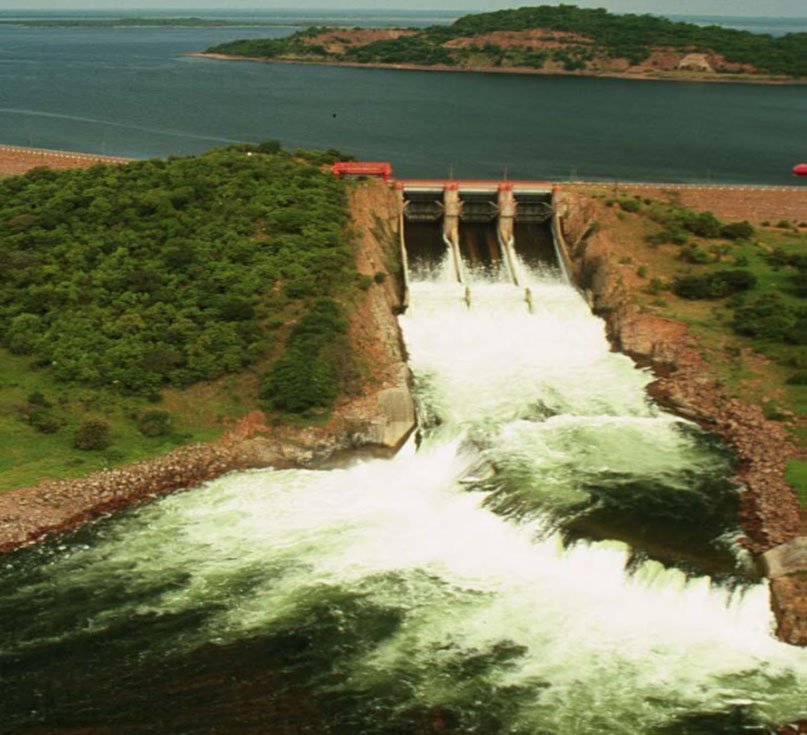
Figure 3.3.1: Kafue dam (2016). Source Credit: WWF. Sources: https://share.google/f2VCxPGFRGu3k9lCp
Task for students:
Assignment: Water Law and Governance (Answer the following questions)
- Cite at least three academic or legal sources (APA referencing style).
- Analyze the key legal principles governing water rights for upper and lower riparian countries and customary water rights.
- Discuss their strengths and weaknesses in ensuring sustainable and equitable water resource management. Provide examples of how these principles are applied in different jurisdictions.
Please answer in W-001 Forum.
3.3.2 Water Policy
Water policy outlines strategic frameworks and regulatory measures for sustainable water management. An effective water policy ensures equitable access, economic efficiency, and environmental sustainability. Governments, international organizations, and non-governmental actors collaborate to design and implement policies to address water scarcity, pollution, and climate change (Swarajya Staff, 2024; Kapfudzaruwa, & Sowman, 2009; Mekong River Commission, 1995; United Nations, 1997).
3.3.2.1. Key Elements of Water Policy
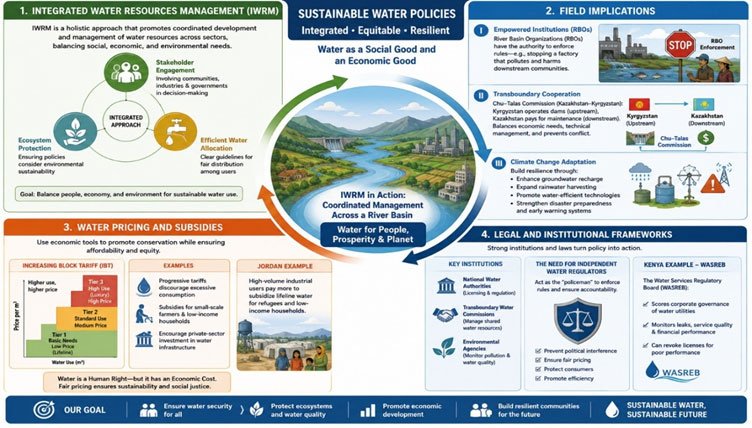
Figure 3.3.2: Dr. Nusrat Yaqoob generated. Data source: Bressers & Richardson (2024). Sojamo, & Rudebeck, (2024).
3.3.3. Integrated Water Resources Management (IWRM)
IWRM is the "holistic" approach to water. Its field implication is a shift from "siloed" management (where agriculture and industry don't talk) to a unified river-basin approach. Integrated Water Resources Management (IWRM) promotes coordinated development and management of water resources across sectors, balancing social, economic, and environmental needs. The approach includes:
- Stakeholder engagement: Involving local communities, industries, and governments in decision-making.
- Ecosystem protection: Ensuring that water policies consider environmental sustainability.
- Efficient water allocation: Establishing clear guidelines for water distribution among competing users.
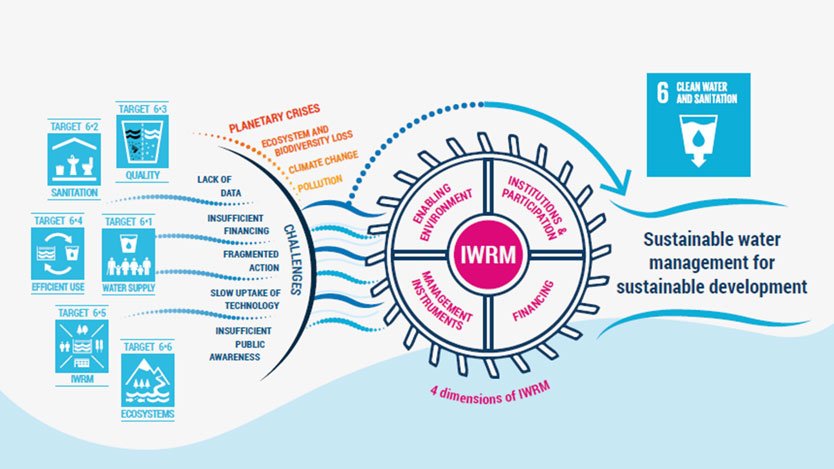
Figure 3.3.3: IWRM framework for water security and integration. Source: (UN-Water, 2013)
3.3.3.1. Field Implication
- In practice, it means creating River Basin Organizations (RBOs) that have the power to tell a factory to stop polluting because it is killing the fish downstream that local farmers rely on.
- The Chu-Talas Commission between Kazakhstan and Kyrgyzstan is an IWRM success. Kyrgyzstan operates the dams (upstream), and Kazakhstan pays a share of the maintenance costs (downstream). This balances economic needs with technical management to prevent regional conflict.
- Climate change poses significant challenges to water availability, leading to droughts, flooding, and extreme weather events. Effective water policies must incorporate adaptation strategies, such as:
- Enhancing groundwater recharge systems.
- Expanding rainwater harvesting infrastructure.
- Promoting water-efficient agricultural and industrial technologies.
- Strengthening disaster preparedness and early warning systems.
3.3.3.2. Water Pricing and Subsidies
Economic instruments such as tiered water pricing and targeted subsidies encourage responsible water usage while ensuring affordability for marginalized communities. Proper pricing mechanisms help address overuse and promote conservation efforts. Examples include:
- Implementing progressive water tariffs to discourage excessive consumption.
- Providing subsidies for small-scale farmers and low-income households.
- Encouraging private-sector investment in water infrastructure
Salman et al. (2010) clearly defined water as both a social good (a human right) and an economic good (it has a cost to treat and deliver). In this context, the most effective field tool is the Increasing Block Tariff (IBT). Users who use only what they "need" pay a very low price, but those who use water for "luxury" (e.g., swimming pools or large lawns) pay a premium rate that subsidizes the poor. Concerning to this Jorden is a vivid example, because the country is one of the most water-scarce countries; Jordan uses a highly sophisticated tiered pricing system. By charging high-volume industrial users more, they are able to provide a "lifeline" amount of water to Syrian refugee camps and low-income Jordanian households at almost no cost.
3.3.3.3. Legal and Institutional Frameworks
Effective water policies require strong regulatory bodies to enforce laws, resolve conflicts, and oversee sustainable water usage. Government agencies, water boards, and international organizations play a critical role in ensuring compliance and adaptation to emerging challenges. Examples include:
- National Water Authorities are responsible for licensing and regulation.
- Transboundary water commissions manage international water resources.
- Environmental agencies monitor pollution and water quality.
However, without a "policeman" (Institution) and a "handbook" (Law), policy is just a wish list. Therefore, this requires the creation of Independent Water Regulators. These bodies are essential because they prevent political interference in water pricing and ensure that private water companies don't overcharge citizens. In Kenya, the Water Services Regulatory Board (WASREB, 2022) issues "Corporate Governance" scores for all water utilities. If a local water company is found to be leaking so much water or failing to serve the poor, WASREB can revoke its license. This creates a field-level accountability mechanism that forces efficiency (Cullet, 2021; Gleick, 2014; Dellapenna & Gupta, 2008; Hussain & Hanjra, 2004).
Table: Field Analysis: Identification of Governance Gaps
| Policy Element | The "Symptom" of Failure (Field Observation) | The Governance Solution |
| IWRM | Upstream farmers use all the water; downstream fisheries die. | Establishing a River Basin Authority with cross-sector powers. |
| Climate Adaptation | The city floods every time it rains because the soil is paved over. | Nature-Based Solutions (e.g., "Sponge City" policies like those in China). |
| Pricing/Subsidies | The wealthy water their lawns cheaply while the poor buy expensive water from trucks. | Implementing Increasing Block Tariffs (IBTs). |
| Legal Framework | Factories dump waste into the river because the fine is cheaper than treating the water. | Empowering an Independent Regulator with "Polluter Pays" legal authority. |
Video: Integrated Water Resources Management Works
This video specifically explains how IWRM moves from a policy document to a field-level reality, balancing the needs of different stakeholders.
Expert Q&A Panel:
"Navigating Water Law and Policy: Challenges and Solutions"
Mr. Johnson, a member of the Palaru Protection Committee, will discuss contemporary challenges and answer student questions related to water law and policy. The session will provide valuable insights into real-world applications, legal enforcement, and innovative policy approaches to water management.
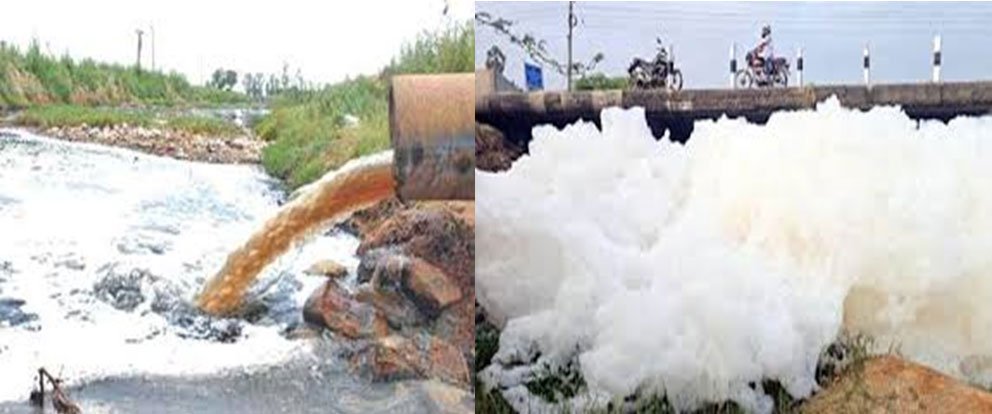
Figure 3.3.4. Photo Source: Swarajya Staff (2024, May 22). https://swarajyamag.com/news-brief/tamil-nadus-palar-river-ravaged-by-tanneries-sc-issues-stern-warning-orders-immediate-action.
QUIZ: To analyze how water law and policy are applied in real-world settings and to identify "governance gaps," use your country case study and fill out the Field Analysis Worksheet.
Mandatory Quiz: [Click Here]
References
Bangladesh Planning Commission. (2018). Bangladesh Delta Plan 2100: Baseline studies on
water resources. Government of the People's Republic of Bangladesh. https://bangladesh.gov.bd/
Bressers, H., O'Toole, L. J., & Richardson, J. (2024). Networks as models of analysis: Water policy
in comparative perspective. In Networks for Water Policy (pp. 1-23). Routledge.
Cullet, P. (2021). Water law in India: An introduction to legal instruments. Oxford University
Press. https://doi.org/10.1093/oso/9780190124311.001.0001
Dellapenna, J. W., & Gupta, J. (Eds.). (2008). The evolution of the law and politics of water.
Springer. https://doi.org/10.1007/978-1-4020-9867-3
Gleick, P. H. (2014). The world's water, volume 8: The biennial report on freshwater resources.
Island Press. https://doi.org/10.5822/978-1-61091-483-3
Global Water Partnership. (2019). IWRM action hub: Case studies on transboundary cooperation.
https://www.gwp.org/en/learn/iwrm-toolbox/
Hussain, I., & Hanjra, M. A. (2004). Irrigation and poverty alleviation: Review of the empirical
evidence. Irrigation and Drainage, 53(1), 1–15. https://doi.org/10.1002/ird.114
Kapfudzaruwa, F., & Sowman, M. (2009). Is there a role for traditional governance systems in
South Africa's new water management regime? Water SA, 35(5), 683–692. https://doi.org/10.4314/wsa.v35i5.49195
Mekong River Commission. (1995). Agreement on the cooperation for the sustainable
development of the Mekong River Basin. https://www.mrcmekong.org/wp-content/uploads/2024/08/The-Mekong-Agreement.pdf
Nile Basin Initiative. (2021). State of the River Nile basin 2021. NBI Secretariat.
https://nilebasin.org/publications/
Salman, A., Karablieh, E., Wolff, H. P., Fisher, F. M., & Haddadin, M. J. (2010). The economics
of water in Jordan. In M. J. Haddadin (Ed.), Water resources in Jordan: Evolving policies for development, the environment, and conflict resolution (pp. 116–149). Routledge.
Sojamo, S., & Rudebeck, T. (2024). Corporate Engagement in Water Policy and Governance: A
Literature Review on Water Stewardship and Water Security. Water Altern. Interdiscip. J. Water Politics Dev, 17, 292-324.
Swarajya Staff. (2024, May 22). Tamil Nadu's Palar River ravaged by tanneries: SC issues stern
warning, orders immediate action. Swarajya. https://swarajyamag.com/news-brief/tamil-nadus-palar-river-ravaged-by-tanneries-sc-issues-stern-warning-orders-immediate-action
UNESCO. (2012). Cultural landscape of Bali Province: The Subak system as a manifestation of
the Tri Hita Karana philosophy. UNESCO World Heritage Centre. https://whc.unesco.org/en/list/1116/
United Nations. (1997). Convention on the law of the non-navigational uses of international
watercourses (A/RES/51/229). https://legal.un.org/ilc/texts/instruments/english/conventions/8_3_1997.pdf
Water Services Regulatory Board. (2022). Impact: A performance report of Kenya's water services
sector. WASREB. https://wasreb.go.ke/publications/
Additional Video Resources
- Frameworks: The OECD 12 Principles on Water Governance:
- Introduction to Water Rights and Law:
- Policy in Action: How IWM Works: