Unit 3.4. Water Policy Implementation Case Studies
Instructor: Dr. Marirajan Thiruppathi
Associate Instructor: Dr. Nusrat Yaqoob
In the previous session (3.3 – Water Law and Policy), we analyzed the legal principles and policies governing water rights, assessed regulatory frameworks, and explored sustainable solutions to water management challenges. This included an experience-sharing session with water rights activist Mr. Johnson.
In this session (3.4 – Water Policy Implementation Case Studies). It is a known phenomenon that effective policy implementation is the bridge between theoretical policy formulation and tangible field-level impact. Particularly in regions facing acute water scarcity and competing demands from agriculture, industry, and urban sectors, the success of a policy is determined by its institutional adaptability and fiscal sustainability. For instance, Australia’s National Water Policy is the gold standard for market-based reallocation because Australia decoupled water rights from land ownership, creating one of the world's most sophisticated water markets. After that, India’s water policy reforms are an example of decentralization and participatory governance that focus on the transition from centralized command-and-control to participatory irrigation management (PIM). The following section examines the successes and challenges of "Pani Panchayats" (Water User Associations) in various Indian states, emphasizing how local community involvement can reduce the fiscal burden on the state while improving the "Equitable Distribution" of water at the tail-ends of canal systems. Moreover, NGOs in Latin America are vivid examples of bridging the governance gap; especially in many Latin American countries, formal state institutions often struggle with reaching marginalized or mountainous communities. The details provided in the subsequent section show how Non-Governmental Organizations have acted as Intermediaries, implementing low-cost, decentralized water governance models. This study emphasizes "Social Capital" as a tool for enforcing water laws where formal policing is absent. Vertical coordination between Federal and Provincial governments is the "Achilles' heel" of water reform. The emerging role of Smart Water Meters and Satellite Monitoring (as seen in the Murray-Darling Basin) in ensuring policy compliance. The critical role of "Cost-Recovery" mechanisms (Abiana) in ensuring the long-term O&M (Operation & Maintenance) of water infrastructure.
By the end of this session, participants will be able to critically assess different methodologies of water policy implementation, identify key factors contributing to their success or challenges, and apply these insights to formulate effective water management strategies in various settings.
3.4.1 Case Study 1: Australia’s National Water Policy
This case study highlights the importance of Economic Valuation and the role of the "Commonwealth Environmental Water Holder" in balancing economic needs with ecological sustainability. For Pakistan, this offers a blueprint for addressing waterlogging and salinity through market discipline. Australia’s. National Water Policy is a comprehensive framework designed to manage the country’s scarce water resources sustainably. The policy is based on the National Water Initiative (NWI), adopted in 2004, which outlines principles for efficient water allocation, environmental sustainability, and economic development (Commonwealth of Australia, 2004). The NWI promotes water use efficiency, equitable distribution, and the protection of water-dependent ecosystems. Key objectives include water access entitlements, water planning frameworks, and sustainable water resource management across jurisdictions.
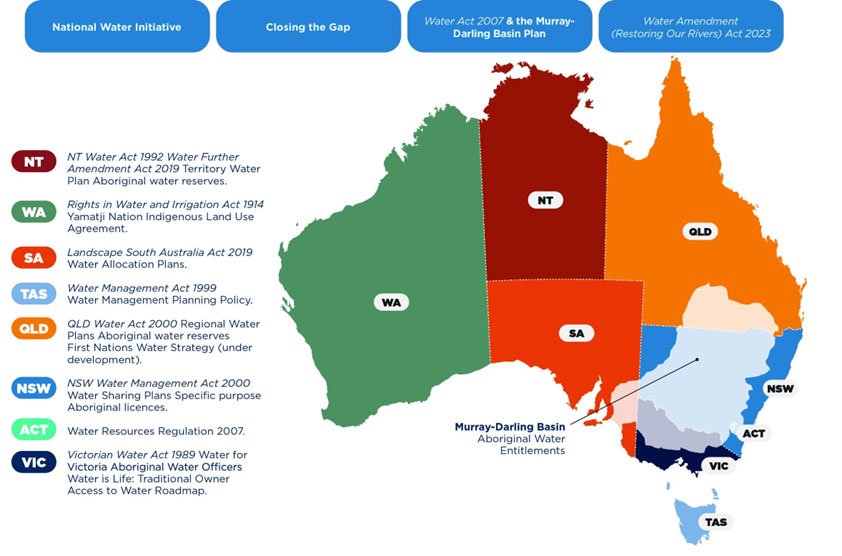
Figure 3.4.1: Murray -Darling River Basin. Source: https://www.ilsc.gov.au/knowledge-hub
Figure 3.4.1 presents the Australian national water policy framework, which demonstrates how water governance in Australia is managed through an integrated system of federal policies, state legislation, and Indigenous water rights initiatives. At the national level, major frameworks such as the National Water Initiative (NWI), the Water Act 2007, the Murray–Darling Basin Plan, the Closing the Gap strategy, and the Water Amendment (Restoring Our Rivers) Act 2023 provide the overall direction for sustainable water management, environmental protection, and climate resilience. The map further illustrates how each Australian state and territory has developed its own water laws and management plans, including water allocation systems, regional water planning, and licensing arrangements. In addition, the framework highlights the growing recognition of Aboriginal and Torres Strait Islander communities in water governance through Indigenous water reserves, cultural water entitlements, Traditional Owner access programs, and First Nations water strategies. Special emphasis is placed on the Murray–Darling Basin, which represents a cooperative inter-state river management system aimed at balancing agricultural, environmental, and community water needs. Overall, the figure shows that Australia’s water governance framework is based on cooperative federalism, sustainable resource management, and increasing inclusion of Indigenous rights in national and regional water policy.
Therefore, a significant feature of Australia’s policy is its emphasis on market-based mechanisms to improve water use efficiency. Water trading, introduced under the NWI, allows for the transfer of water rights between users, encouraging the allocation of water to its highest-value uses. This approach has been particularly effective in the Murray-Darling Basin, where water markets have helped manage scarcity and promote agricultural productivity (Moreira et al., 2024; Vietz, 2013).
Challenges persist, including balancing environmental needs with agricultural demands, addressing the impacts of climate change, and ensuring Indigenous communities have equitable access to water resources. Despite these challenges, Australia’s National Water Policy remains a model for integrated water resource management.
3.4.2 Case Study 2: Water Policy Reforms in India
Given the apparent limits to further water resource development across large parts of the country—driven by climate change, population pressures, and food insecurity, particularly due to massive migration toward urban centers—it became evident by the late 1990s that a 'business-as-usual' approach would fail to meet future demand. Consequently, an urgent need for innovative ideas arose, bringing together scholars and practitioners to integrate modern IWRM principles.
This culminated in the introduction of the Twelfth Plan (2012), which represented a major paradigm shift in water resource management. Despite initial resistance from policymakers, a national consensus was built to address the growing crisis and navigate complex governance issues. This collaborative process ultimately transformed India’s approach to water governance and policy planning.
As a result of this shift, India has undertaken extensive reforms to mitigate a water crisis exacerbated by industrial expansion and climatic volatility. The National Water Policy (2012) now serves as a strategic framework for state governments to ensure sustainable management, emphasizing Integrated Water Resources Management while prioritizing water for drinking, sanitation, and food security (Srivastava, 2022).
The key reforms include the promotion of water use efficiency, demand management, and the revival of traditional water conservation practices. The policy advocates for participatory approaches, involving local communities in water governance, and encourages the adoption of new technologies for irrigation and wastewater treatment (Abrams, 2025; Mukhtarov, 2022).
Despite these reforms, challenges such as water pollution, groundwater depletion, and inter-state water disputes persist. Climate variability further exacerbates these issues, highlighting the need for adaptive water management strategies. India’s experience underscores the importance of aligning water policies with sustainable development goals (SDGs), particularly SDG 6. Ultimately, the Indian case study demonstrates that while robust policy frameworks are essential, their success hinges on the transition from 'infrastructure-centric' to 'resource-centric' management. This requires strengthening institutional transparency, ensuring equitable benefit-sharing among transboundary stakeholders, and securing sustainable fiscal mechanisms to bridge the gap between national vision and grassroots execution (Abrams, 2025; Mukhtarov, 2022).
Watch Video:
3.4.3 Case Study 3: The Role of NGOs in Water Policy Implementation in Latin America
Non-Governmental Organizations (NGOs) play a pivotal role in implementing water policies across Latin America, particularly in regions where governmental reach is limited. Their involvement ranges from community mobilization and education to infrastructure development and advocacy for sustainable water management practices. Whereas, in Argentina, the non-profit and community-led initiatives have been instrumental in advocating for water rights and influencing international water policies. They collaborate with civil society to ensure equitable water access and protect water as a public good (Samnakay et al., 2024).
NGOs in Central America, Guatemala, Honduras, El Salvador, and Nicaragua have implemented programs that enhance water quality, promote hygiene education, and build resilient water infrastructure. These initiatives often involve local communities, ensuring that solutions are culturally appropriate and sustainable.
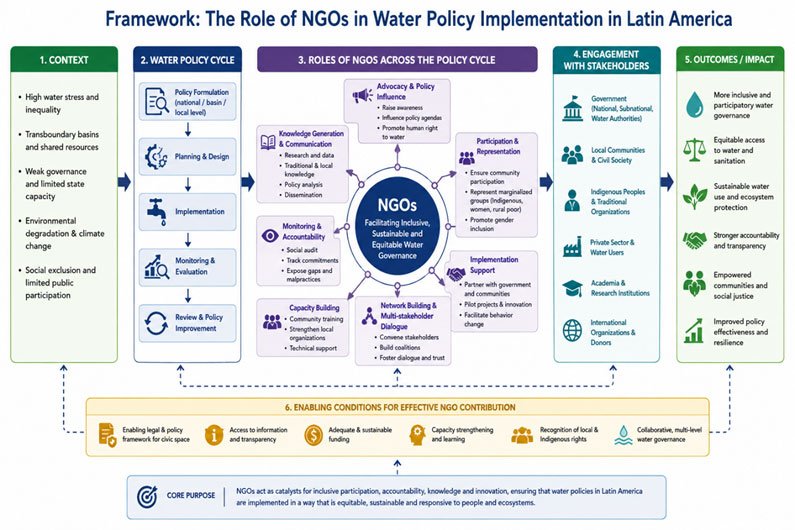
Figure 3.4.2: Sources: Dr. Nusrat Yaqoob generated Data Source: Reis, N. (2023)
The above-provided framework illustrates the vital transition across Latin America from centralized, top-down control toward participatory and adaptive water governance. While the diagram outlines the conceptual roles of NGOs, the narrative of the region’s water policy shows how these roles are put into practice. The shift begins with fundamental rights, as seen in Uruguay’s 2004 constitutional reform, where civil society successfully pushed to redefine water as a human right rather than a commodity, legally mandating public participation in all basin management. This directly feeds into the policy cycle by ensuring that NGOs act as catalysts for change, a role best exemplified in the Laguna del Cisne Basin. When pesticide contamination threatened local supplies there, community groups and NGOs pressured the government to form a formal Basin Commission, leading to concrete outcomes like pesticide bans, protection zones, and community-led water monitoring. To achieve the sustainable outcomes shown in the framework, these governance models must bridge different knowledge systems. Initiatives like the GovernAgua Project demonstrate that combining scientific research with local, traditional knowledge makes water management more resilient to climate-driven droughts and floods.
However, the effectiveness of stakeholder engagement varies significantly across the region; while Brazil and Uruguay have institutionalized basin committees for local planning, other areas face deep hurdles, such as Argentina’s provincial fragmentation or the market-driven inequities in Chile that often marginalize community voices. Ultimately, for the inclusive and equitable impacts shown in this diagram to be realized, state institutions must provide the necessary enabling conditions, moving beyond superficial consultation to genuinely fund and implement the collaborative decisions made by these participatory commissions. But the overall challenges faced by NGOs include limited funding, political resistance, and the need for capacity-building.
Task for Students: case study-based activity
Task: Write an in-depth 100-word analysis of water policy implementation through the real-world case studies by viewing the video. Theanalysis should be posted in Forum W-001.
Conclusion Unit 3.4.
Through the examination of these case studies, participants will gain a nuanced understanding of the complexities involved in water policy implementation. This knowledge will equip them to develop and advocate for effective water management strategies tailored to specific environmental, social, and political contexts.
References
Abrams, R. H. (2025). Water Governance and Water Futures in the United States and Australia. Nat. Res.
J., 65, 193. https://digitalrepository.unm.edu/nrj/vol65/iss2/5.
Moreira, F. D., Fonseca, P. R. S., Miranda, R. M., Oliveira da Costa, L., & Mejias Carpio, I. E. (2024).
Stakeholder engagement for inclusive water governance in a rural community in Brazil. Frontiers in Water, 6, 1378514. https://doi.org/10.3389/frwa.2024.1378514.
Mukhtarov, F. (2022). A review of water policies on the move: diffusion, transfer, translation or
branding? Water Alternatives, 15(2). https://www.researchgate.net/publication/361143386_A_Review_of_Water_Policies_on_the_Move_Diffusion_Transfer_Translation_or_Branding.
Reis, N. (2023). Between development and banking: The KfW development bank in Latin
America's water sector. In Public Banks, Public Water (pp. 138-164). Routledge.
Samnakay, N., Alexandra, J., Wyborn, C. A., & Bender, I. (2024). Climate adaptive water policy
in Australia’s Murray Darling basin: soft options or hard commitments? Ecology and Society, 29(1). Doi: https://doi.org/10.5751/ES-14578-290101.
Sojamo, S., & Rudebeck, T. (2024). Corporate Engagement in Water Policy and Governance: A Literature
Review on Water Stewardship and Water Security. Water Altern. Interdiscip. J. Water Politics Dev, 17, 292-324.
Srivastava, S. (2022). Understanding regulatory cultures: The case of water regulatory reforms in
India. Regulation & Governance, 16(4), 1290 1305. https://doi.org/10.1111/rego.12408
Vietz, M. (2013). Water struggles in Argentina: international policies, NGOs, and civil society in the
pursuit of water rights (Doctoral dissertation, University of Pittsburgh). https://share.google/5eT28brJfTdhNpl03.