Unit 3.2. Water Governance Indicator Framework
Instructor: Dr. Marirajan Thiruppathi
Associate Instructor: Dr. Nusrat Yaqoob
In the previous session “3.1: Water Governance and Its Principles”, we explored the concept of water governance, which encompasses the political, social, economic, and administrative systems that influence water resource management and service delivery. We examined how these systems involve the development and implementation of policies, legislation, and institutional frameworks that determine the utilization, protection, and distribution of water among various stakeholders, including governments, private entities, civil society organizations, and local communities.
In today’s session 3.2, effectively assessing and monitoring governance structures is crucial for ensuring sustainable and equitable water resource management. Water governance indicators serve as essential tools in this process, providing measurable metrics to evaluate the performance of governance systems. By the end of this session, participants will have a comprehensive understanding of water governance indicators and their frameworks, enabling them to assess governance performance, analyze real-world applications, and develop strategies for implementing these frameworks to monitor and improve water governance across various contexts.
Lecturer: Mr. Boniface Sichone
Lecture Topic: Strengthening Urban Water Governance through Community Participation: The Zambian Experience
Recorded Video: https://youtu.be/wJblyPlU1IE
PPT File
3.2.1 Water Governance Indicator Definition
Water governance indicators serve as critical tools for evaluating the effectiveness, efficiency, and inclusiveness of water governance structures. These indicators assess policy implementation, institutional frameworks, and governance performance in water resource management. The Organization for Economic Co-operation and Development (OECD, 2015) provides a complete conceptual framework of water governance principles and indicators that help governments, institutions, and stakeholders track progress, identify gaps, and implement necessary improvements to achieve sustainable water management.
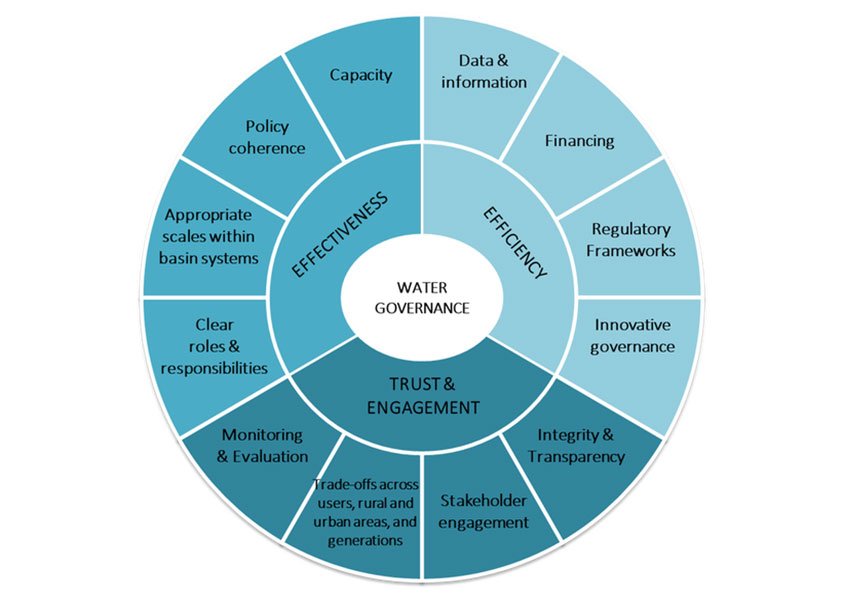
Figure 3.2.1: OECD Principles on Water Governance; Source: OECD (2015), www.oecd.org/governance/oecd-principles-on-water-governance.htm
These OECD principles and water governance are generally categorized into three core dimensions: effectiveness, efficiency, and trust & engagement.
- Effectiveness concerns whether the "right" rules and institutions are in place to meet policy objectives. Linh (2025) applied the OECD framework to evaluate local water challenges in Vietnam's Soc Trang Province. More recently, this dimension also assesses the functioning of River Basin Organizations (RBOs) to determine whether bodies managing water at a hydrographic scale possess actual authority, and measures the presence of joint commissions or treaties for managing shared international rivers or aquifers.
- Efficiency focuses on whether water is being managed at the least cost to society while maximizing benefits. This includes the Operating Cost Coverage Ratio (OCCR), a financial metric calculated as total revenues divided by running costs to ensure utilities can sustain operations without constant emergency subsidies. It also tracks Non-Revenue Water (NRW), which represents the percentage of water lost through leaks or illegal connections, and Water-Use Efficiency (WUE), a macroeconomic indicator measuring the value added to the economy in USD per cubic meter of water used across the agricultural and industrial sectors. In Romania, the Watershed Sustainability Index was applied to the Motru River to assess environmental health and efficiency (Mititelu-Ionuş, 2017).
- Trust and Engagement measure the transparency, fairness, and participatory nature of the governance process. This involves tracking stakeholder engagement mechanisms by evaluating the frequency and quality of public consultations, particularly to ensure that vulnerable groups are represented. This dimension also encompasses integrity and transparency practices, which measure the existence of anti-corruption audits and the public availability of water budgets and data. Furthermore, it evaluates the time to resolve customer complaints to determine how quickly water service providers respond to and resolve public issues, ensuring a responsive and inclusive governance system. For these indicators, the "Water Integrity Network" often cites the use of social audits in South Asia as a key example. Moreover, in this scenario, local communities are given access to the budget for a new canal lining project and are invited to a public hearing to verify that the materials used match the financial reports. Thereby, measuring transparency. Another example is found in modern urban utilities that utilize mobile applications for "Customer Complaint Resolution Time," where the public can track in real-time how many hours it takes for a utility to fix a reported pipe burst in their neighborhood.
Jiménez et al. (2020) and GWP (2002) provide a practical framework for practitioners to unpack the complexities of water governance systems. Particularly, these principles enable policymakers to measure the success of water governance structures, align national policies with international best practices, and foster accountability and transparency. National legislation, such as the Canada Water Act (1985) and the Government of Kenya (2002) Water Act, provides the legal basis for managing domestic water resources. Especially concerning the effectiveness of indicators, a primary example is the European Union’s Water Framework Directive, which mandates that all member states implement specific national laws to achieve "good status" for all water bodies. This is measured by the actual enforcement of pollution limits and the legal standing of river basin management plans. Another example is the Indus Waters Treaty between Pakistan and India, which serves as a transboundary arrangement indicator; its effectiveness is tracked by the frequency of Permanent Indus Commission meetings and the successful exchange of hydrological data. Grafton et al. (2023) highlight the distinction between the market price and the intrinsic value of water resources. Especially, in the realm of efficiency principles and indicators, Singapore’s national water agency, PUB, provides a global benchmark for Non-Revenue Water (NRW). By utilizing advanced acoustic sensors and digital twins, they have reduced water loss to approximately 5%, significantly lower than the global average. Similarly, in the agricultural sector of Australia’s Murray-Darling Basin, Water-Use Efficiency (WUE) is measured by the economic "crop-per-drop" value, where the government tracks the dollar value of almond or grape yields relative to the gigalitres of water diverted from the river.
The following diagram shows how the framework works:
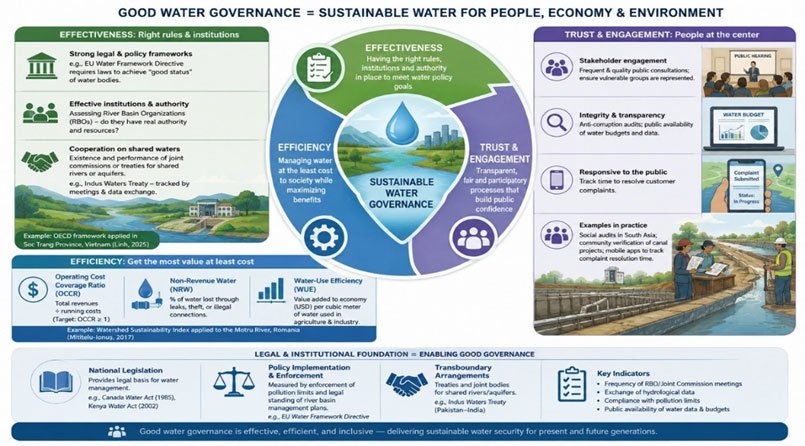
Figure 3.2.2: Sources: Water Governance Framework. Dr. Nusrat Yaqoob generated. Data Source: Mititelu-Ionuș (2017). Linh (2025).
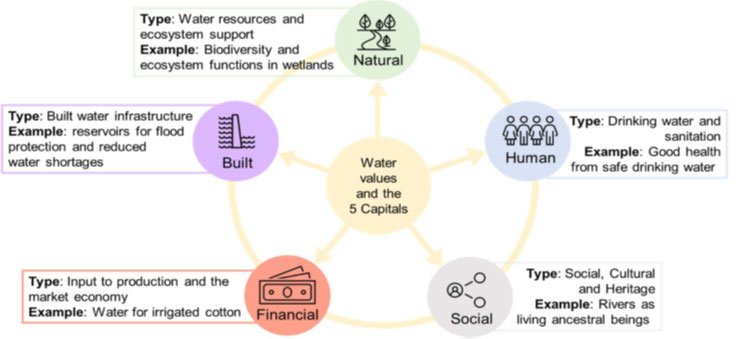
Figure 3.2.3: Water Values and the Five Capitals. Source: Dr. Nusrat Yaqoob generated.
3.2.2 Water Governance Indicator Framework
The above-provided figures 3 and 4 depict a structured framework for assessing water governance, which includes key indicators that focus on institutional, regulatory, economic, environmental, and participatory aspects. Below is an in-depth discussion of each component of the framework:
3.2.2.1. Institutional Capacity Indicators
Institutional indicators evaluate the strength, capability, and effectiveness of governance institutions. These indicators measure:
- The presence and clarity of institutional roles and responsibilities in water governance.
- Coordination among government agencies, local authorities, and international bodies.
- The level of technical and human resource capacity within water management institutions.
3.2.2.2. Regulatory Indicators
Regulatory indicators assess the effectiveness of legal frameworks and policies governing water resources. These indicators include:
- The presence of comprehensive national and regional water laws.
- The enforcement of water regulations and compliance monitoring.
- The effectiveness of dispute resolution mechanisms in water-related conflicts.
3.2.2.3. Stakeholder Participation Indicators
These indicators measure the extent to which communities, private entities, and civil society organizations participate in water governance. They assess:
- The inclusiveness of marginalized groups in water decision-making.
- The role of community-based water management initiatives.
- Public awareness campaigns and information dissemination.
3.2.2.4. Economic and Financial Indicators
Economic and financial indicators analyze water resource allocation, funding models, and financial sustainability. They evaluate:
- The availability and allocation of public and private investments in water infrastructure.
- The efficiency of water pricing mechanisms and tariff structures.
- The financial viability of long-term water governance projects.
3.2.2.5. Environmental and Sustainability Indicators
These indicators ensure governance decisions support long-term ecological balance and resilience against climate change. They include:
- The integration of environmental impact assessments in water governance decisions.
- The effectiveness of watershed protection and conservation strategies.
- Climate resilience strategies within water governance policies.
3.2.3. Practical Examples of the Framework in Action
To better understand these indicators and principles, consider the following real-world examples:
- Singapore’s national water agency, PUB, is a global model for institutional strength and capacity to deliver efficient services. They manage the entire water cycle—from rain collection to used-water reclamation—under one roof. Their "Four National Taps" strategy succeeds because they have high human resource capacity and a clear, non-overlapping mandate.
- The EU Water Framework Directive is a clear example of how regulatory bodies work. In the European Union, the Water Framework Directive (WFD) acts as a powerful regulatory tool. It legally requires all member states to reach "good status" for their water bodies. If a country fails to monitor its river basins or meet quality standards, they face legal penalties from the European Court of Justice through the cost internalization mechanism.
- Following the Kenya Water Act (2002), the government established Water Resource Users Associations (WRUAs) to integrate stakeholders' participation into the policy process. These are community-led groups where local farmers, pastoralists, and residents collaboratively manage river basins, reducing conflict over water during dry seasons.
- Economic and Financial Indicators (Example: South Africa’s Free Basic Water) can be applied as a tool to measure success. For instance, South Africa uses a "Rising Block Tariff" system. To ensure equity, the government provides a basic amount of water (6,000 liters per month) for free to every household. Higher consumption is then priced progressively higher to fund the maintenance of the national water infrastructure.
- In Canada, governance frameworks often use "biological indicators" like the presence of certain insects in stream beds to measure watershed health. These environmental assessments are integrated directly into policy decisions regarding whether a new mine or factory can be built near a water source.
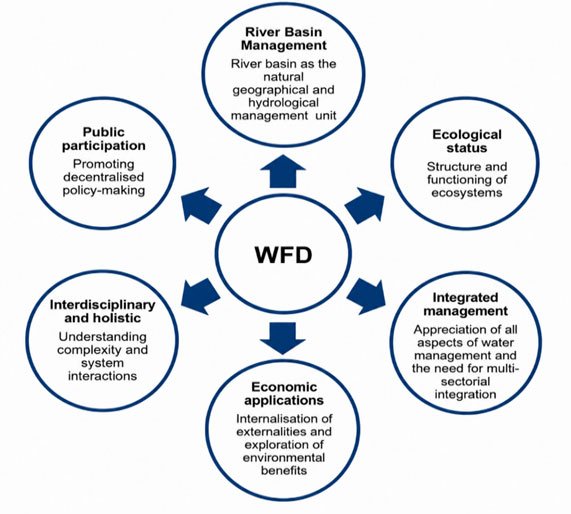
Figure 3.2.4: Source: Giakoumis, T., & Voulvoulis, N. (2018). The transition of EU water policy towards the Water Framework Directive’s integrated river basin management paradigm. Environmental management, 62(5), 819-831.
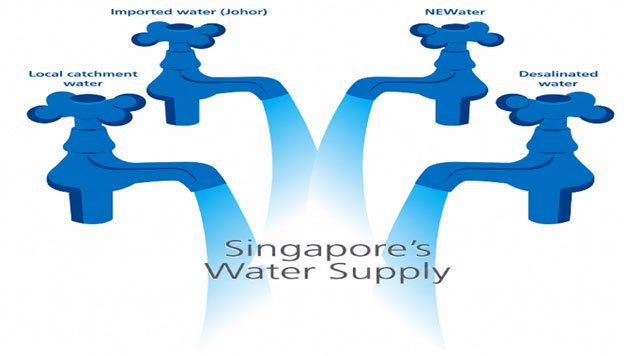
Figure 3.2.5: Source: Irvine, K. N., Chua, L. H. C., & Eikass, H. S. (2014). The four national taps of Singapore: A holistic approach to water resources management from drainage to drinking water. Journal of Water Management Modeling, 22, Article C375. https://doi.org/10.14796/JWMM.C375
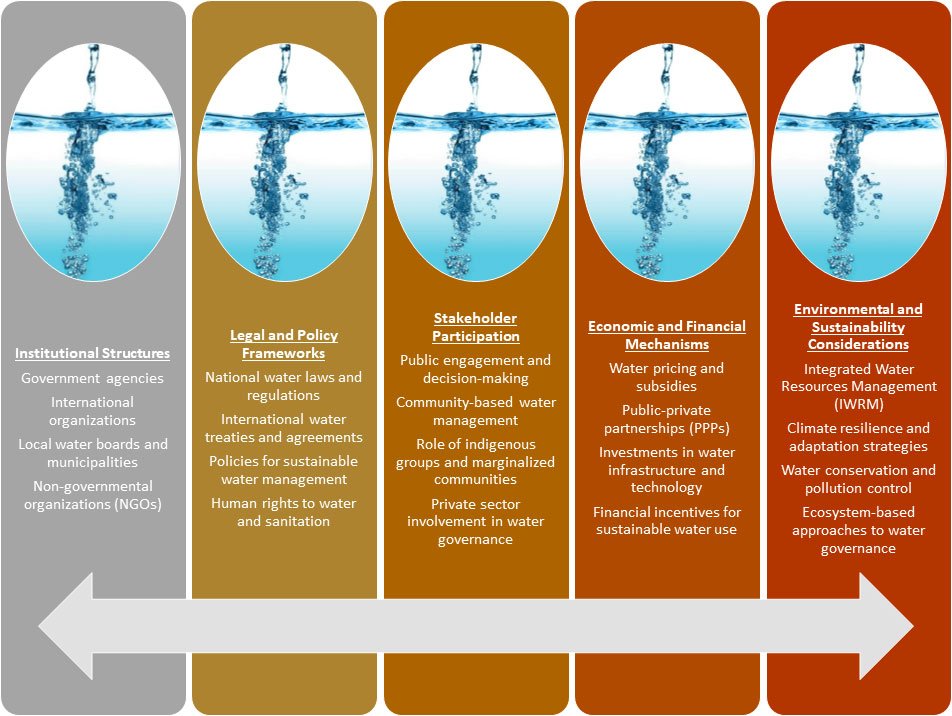
Figure 3.2.6: The Water Governance Framework consists of five interconnected components. Data Source: (European Commission, 2000; UN-Water, 2021).
3.2.4. Case Studies on Water Governance
The learners are going to be divided into three groups and asked to do detail case study analysis of the cases presented here.
3.2.4.1. Case Study 1: Water Governance in Canada
Canada’s approach to water governance is characterized by decentralization, community involvement, and the recognition of indigenous water rights. The country’s governance framework is designed to ensure equitable water allocation across its diverse geographical regions, including lakes, rivers, and wetlands.
Source: OECD
Task for Students
Please download the full text of the Canada Water Act in PDF version from this link: https://www.laws.justice.gc.ca/eng/acts/C-11/FullText.html.
Watch the Video above.
Discussion Questions:
- How do you compare Canada’s decentralized approach to water governance with centralized models in other countries?
- What are the benefits and challenges of integrating indigenous knowledge into national water policies?
- How can Canada address the growing concerns related to water scarcity and climate change?
Please post your answer to these questions in the Forum W-001.
3.2.4.2. Case Study 2: Community-Based Water Governance in Kenya
Kenya has adopted a community-driven approach to water governance, empowering local populations to take charge of water resource management through Water Resource Users Associations (WRUAs). This model promotes inclusivity, sustainability, and grassroots participation.
Task for Students
The full text of the Kenya Water Act, 2002, is available in PDF format here: https://www.ppiaf.org/sites/default/files/documents/2002-07/the_water_act_2002_kenya_1.pdf
Discussion Questions:
- How does Kenya’s WRUA model empower local communities in water governance?
- What lessons can other countries learn from Kenya’s community-based approach?
- What additional measures can be taken to address the challenges faced by WRUAs?
Please post your answer to these questions in the Forum W-001.
3.2.4.3. Case Study 3: The European Union’s Water Framework Directive
The European Union’s Water Framework Directive (WFD), adopted in 2000, represents a comprehensive and legally binding transnational governance model for water resource management. It establishes a unified approach to protecting and improving the quality of water bodies across EU member states.
Task for Students
Students are requested to download the full text of the Water Framework Directive, which is available in PDF version from this link: https://eur-lex.europa.eu/eli/dir/2000/60/oj/eng
Discussion Questions:
- How does the EU’s Water Framework Directive facilitate international cooperation in water governance?
- What are the key strengths and weaknesses of the directive’s ecosystem-based approach?
- How can adaptive governance strategies help address emerging water challenges in the EU and beyond?
Please post your answer to these questions in the Forum W-001.
Conclusion of Unit 3.2
Water governance indicators play a crucial role in ensuring that governance systems are effective, accountable, and sustainable. By adopting comprehensive indicator frameworks, policymakers can measure governance performance, identify areas for improvement, and enhance water management systems. Case studies from Canada, Kenya, and the European Union illustrate how different governance models contribute to successful water resource management. Future efforts should focus on improving data collection, enhancing stakeholder engagement, and integrating innovative technologies into water governance frameworks.
References
European Commission. (2000). Directive 2000/60/EC of the European Parliament and of the Council
establishing a framework for Community action in the field of water policy (EU Water Framework Directive). EU Publications Office. https://doi.org/10.2779/30530
Government of Canada. (1985). Canada Water Act (R.S.C., 1985, c. C-11). Minister of Justice.
https://laws-lois.justice.gc.ca/eng/acts/c-11/
Government of Kenya. (2002). The Water Act, 2002 (Kenya Gazette Supplement No. 107).
http://extwprlegs1.fao.org/docs/pdf/ken34743.pdf
Grafton, R. Q., Manero, A., Chu, L., & Wyrwoll, P. (2023). The price and value of water: An economic
review. Cambridge Prisms: Water, 1, Article e20. https://doi.org/10.1017/wat.2023.2
Jiménez, A., Saikia, P., Giné, R., Avello, P., Leten, J., Liss Lymer, B., Lipponen, L., & Schneider, J. (2020).
Unpacking water governance: A framework for practitioners. Water, 12(3), Article 827. https://doi.org/10.3390/w12030827
Linh, H. T. (2025). Assessing water governance trends and challenges at a local level: An application of
the OECD Water Governance Framework in Soc Trang Province, Vietnam. Water, 17(3), Article 320. https://doi.org/10.3390/w17030320
Mititelu-Ionuș, O. (2017). Watershed sustainability index development and application: Case study of the
Motru River in Romania. Polish Journal of Environmental Studies, 26(5), 2095–2105. https://doi.org/10.15244/pjoes/69935
Organisation for Economic Co-operation and Development. (2015). OECD principles on water
governance. OECD Publishing. https://doi.org/10.1787/9789264234833-en
UN-Water. (2021). The United Nations world water development report 2021: Valuing water. UNESCO.
https://doi.org/10.18356/9789210057158
Bibliography
Organisation for Economic Co-operation and Development. (2015). OECD principles on water
governance. OECD Publishing. https://doi.org/10.1787/9789264234833-en
Government of Canada. (1985). Canada Water Act (R.S.C., 1985, c. C-11). Minister of Justice.
https://laws-lois.justice.gc.ca/eng/acts/c-11/
Government of Kenya. (2002). The Water Act, 2002 (Act No. 8 of 2002, Kenya Gazette Supplement No.
107). National Council for Law Reporting. http://extwprlegs1.fao.org/docs/pdf/ken34743.pdf
Government of India, Government of Pakistan, & International Bank for Reconstruction and Development.
(1960, September 19). The Indus Waters Treaty 1960 (UN Treaty Series No. 6032, Vol. 419). United Nations. https://treaties.un.org/doc/Publication/UNTs/Volume%20419/volume-419-I-6032-English.pdf
European Parliament & Council of the European Union. (2000, October 23). Directive 2000/60/EC
establishing a framework for Community action in the field of water policy [EU Water Framework Directive]. Official Journal of the European Communities, L 327, 1–73. https://eur-lex.europa.eu/eli/dir/2000/60/oj/eng.