Unit 3.5. Transboundary Water Conflicts and Treaties
Instructor: Dr. Marirajan Thiruppathi
Associate Instructor: Dr. Nusrat Yaqoob
In the previous session (3.4 – Water Policy Implementation Case Studies), we explored various case studies on water policy implementation, highlighting the complexities of governance frameworks, stakeholder engagement, and institutional challenges. Participants gained insights into how policies are translated into action, the role of governance structures, and the factors that contribute to successful or failed implementation. This understanding serves as a foundation for this session, where we will extend our focus to transboundary water governance, examining conflicts and treaties that shape international water management.
Water is a shared resource that often transcends national borders, making its governance a critical issue in international relations. Transboundary water conflicts arise when countries or regions compete for limited water resources, often leading to diplomatic tensions and, in some cases, disputes. However, international treaties and agreements play a crucial role in facilitating cooperation and ensuring equitable water-sharing arrangements.
Lecturer: Dr. Nusrat Yaqoob
Lecture Topic: Navigating Shared Waters: Transboundary Conflicts, Treaties, and Cooperative Governance
Recorded Video: https://youtu.be/0uFgFLcydvA
PPT File
This session will provide an in-depth exploration of transboundary water governance, key conflicts, and the international legal frameworks that guide water cooperation. Case studies from Southern Africa will be analyzed to understand regional approaches to transboundary water management.
By the end of this session, participants will be able to critically analyze the complexities of transboundary water governance, including conflicts, treaties, and regional case studies
3.5.1. Transboundary Water Definition
Transboundary waters are freshwater resources, such as rivers, lakes, and aquifers, shared between two or more countries. These water bodies often serve as crucial lifelines for nations, providing drinking water, irrigation, and hydroelectric power. However, managing transboundary waters presents challenges due to competing national interests, growing demands, climate change, and uneven distribution of resources. Managing these waters requires collaborative governance, legal agreements, and conflict resolution mechanisms to ensure equitable and sustainable usage. Effective transboundary water management helps prevent disputes, promotes regional stability, and supports economic and environmental sustainability (Wolf, 1999).
Here are a few more definitions about transboundary water.
- United Nations Economic Commission for Europe (UNECE, 1992) "Transboundary waters refer to any surface or groundwater resources that mark, cross, or are located on boundaries between two or more countries, requiring cooperation for their sustainable management."
- International Law Association (ILA, 1966) – Helsinki Rules: "Transboundary waters are water resources that flow across or form international boundaries, necessitating coordinated policies and governance frameworks to ensure their fair and sustainable utilization."
- United Nations Convention on the Law of the Non-Navigational Uses of International Watercourses (1997) "A watercourse is a system of surface and underground waters constituting a unitary whole and flowing into a common terminus, which is shared by two or more states."
- Global Water Partnership (GWP, 2000) "Transboundary waters encompass all freshwater systems—rivers, lakes, and groundwater—shared between two or more countries, requiring multilateral governance to address issues of allocation, quality, and ecosystem preservation."
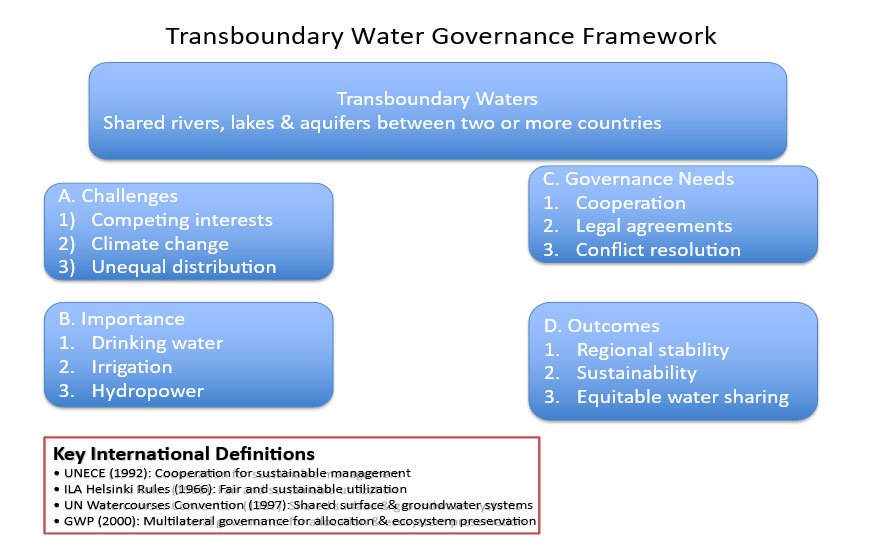
Figure 3.5.1: Source: Dr. Nusrat Yaqoob generated.
Thereby, conflicts over shared water resources have historically contributed to tensions among However, international treaties and agreements have facilitated cooperation and dispute resolution. This session explores major transboundary water treaties and conflicts worldwide, with a specific focus on Southern Africa, where transboundary water management plays a critical role in regional stability and economic development.
3.5.2 Transboundary Treaties
Transboundary water treaties play a crucial role in managing shared water resources, mitigating conflicts, and promoting cooperative governance among riparian states. As water scarcity intensifies due to climate change, population growth, and economic development, international agreements serve as essential frameworks for ensuring sustainable and equitable water distribution. These treaties establish legal principles, governance structures, and mechanisms for dispute resolution, thereby fostering long-term stability in water management.
Below are some of the most significant transboundary water treaties and agreements that have shaped global and regional water governance:
3.5.2.1. Global and Regional Transboundary Water Treaties
- The Indus Waters Treaty (India-Pakistan, 1960): Brokered by the World Bank, the Indus Waters Treaty is one of the most successful transboundary water agreements, despite ongoing political tensions between India and Pakistan. The treaty allocates three eastern rivers (Sutlej, Beas, and Ravi) to India and three western rivers (Indus, Jhelum, and Chenab) to Pakistan, ensuring a fair division of water resources. It also includes provisions for conflict resolution through the Permanent Indus Commission, bilateral negotiations, and third-party mediation if required. Despite periodic disputes, the treaty has remained in force for over six decades (Salman & Uprety, 2002).
- The Nile Basin Initiative (Nile River countries, 1999), the Nile Basin Initiative (NBI) was established as a cooperative framework among 10 riparian countries (Burundi, DR Congo, Egypt, Eritrea, Ethiopia, Kenya, Rwanda, South Sudan, Sudan, Tanzania, and Uganda). Its primary objectives include equitable water utilization, regional economic development, and environmental sustainability. The initiative promotes dialogue and joint investment projects to balance the competing interests of upstream and downstream nations. However, disagreements persist, particularly regarding Ethiopia’s Grand Ethiopian Renaissance Dam (GERD) and its impact on Egypt and Sudan (Waterbury, 2002).
- The Mekong River Agreement (Southeast Asia, 1995) Signed by Cambodia, Laos, Thailand, and Vietnam, this treaty established the Mekong River Commission (MRC) to promote sustainable water management and cooperative development of the Mekong River Basin. The agreement provides guidelines for dam construction, irrigation, and water quality management, aiming to prevent disputes over water usage. However, increasing hydropower projects, particularly in China and Laos, have created tensions over water flow and sediment transport, affecting downstream agricultural and fishing communities (Mekong River Commission, 1995).
- The Colorado River Compact (United States-Mexico, 1922, 1944), the Colorado River Compact was initially signed in 1922 among seven U.S. states to allocate water from the Colorado River. A later agreement in 1944 extended water-sharing provisions to Mexico, ensuring a fixed annual allocation of 1.5 million acre-feet. The treaty has been instrumental in regulating water distribution; however, challenges such as droughts, over-extraction, and climate change have strained the agreement, necessitating periodic renegotiations (Hundley, 2009).
- The Helsinki Rules (International Law, 1966), the Helsinki Rules, established by the International Law Association (ILA), provide a comprehensive legal framework for equitable water-sharing and sustainable transboundary water governance. While not legally binding, these rules have influenced subsequent international agreements, including the 1997 UN Watercourses Convention, which emphasizes fair and reasonable utilization, the obligation to prevent harm, and the duty to cooperate (ILA, 1966).
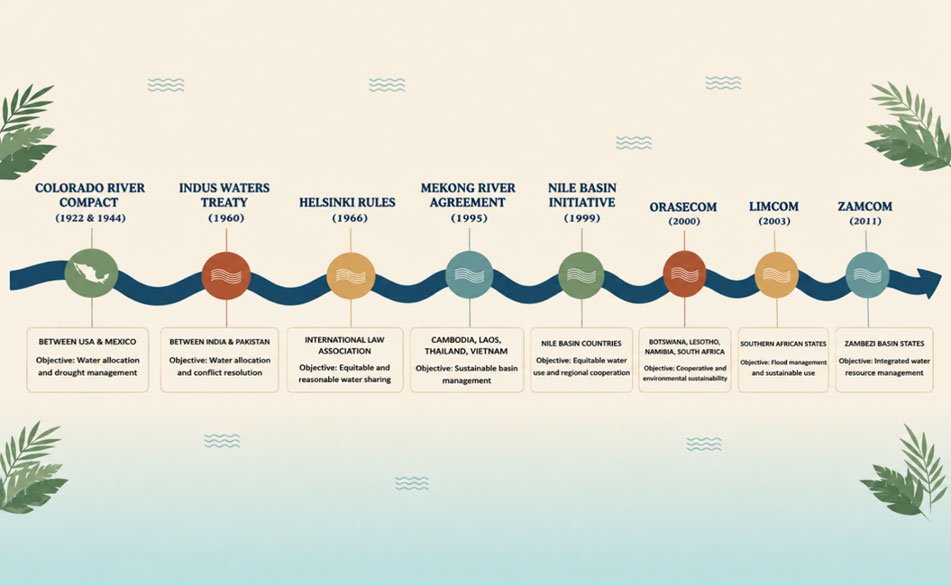
Figure 3.5.2: Historical Timelines of Transboundary Water Treaties. Source: Dr. Nusrat Yaqoob generated
3.5.2.2. Southern African Transboundary Water Treaties
Southern Africa is home to several transboundary river basins that are vital for regional water security, economic activities, and ecosystem sustainability. Recognizing the need for coordinated management, multiple treaties and commissions have been established:
- The Orange-Senqu River Commission (ORASECOM, 2000). ORASECOM was formed to facilitate cooperation between Botswana, Lesotho, Namibia, and South Africa in managing the Orange-Senqu River Basin. The treaty provides guidelines for water allocation, environmental sustainability, and hydropower development, ensuring mutual benefits while minimizing disputes. It also establishes mechanisms for data-sharing, monitoring, and stakeholder engagement to enhance transparency and collaboration.
- The Zambezi Watercourse Commission (ZAMCOM, 2011). The ZAMCOM Agreement brings together eight riparian states (Angola, Botswana, Malawi, Mozambique, Namibia, Tanzania, Zambia, and Zimbabwe) to oversee transboundary water governance of the Zambezi River, one of Africa’s largest river systems. The treaty promotes integrated water resource management (IWRM) and emphasizes joint decision-making on large-scale projects such as dams, irrigation, and hydroelectric power. However, challenges remain in balancing upstream and downstream water needs, particularly during drought periods.
- The Limpopo Watercourse Commission (LIMCOM, 2003) was established to foster joint management and dispute resolution among South Africa, Botswana, Zimbabwe, and Mozambique, which share the Limpopo River Basin. The commission focuses on sustainable water use, flood management, and cross-border cooperation, ensuring that economic activities—such as agriculture, mining, and urban water supply — are managed without causing conflicts among member states.
Overall, transboundary water treaties play a fundamental role in managing shared water resources, reducing conflicts, and fostering regional cooperation. While these agreements provide structured frameworks for water allocation and dispute resolution, their success often depends on political will, economic incentives, and effective governance mechanisms. As climate change and population growth intensify water scarcity, strengthening these treaties through adaptive management and diplomatic dialogue will be critical for ensuring long-term water security.
3.5.3 Transboundary Water Conflicts
Despite international treaties and cooperative frameworks, conflicts over transboundary water resources persist due to political disputes, growing resource demands, and the impacts of climate change. Water scarcity, competing national interests, and hydropower projects often escalate tensions between riparian states.
Some of the most significant transboundary water conflicts worldwide include:
- The Israel-Palestine Water Conflict: Water remains a major point of contention in the Israel-Palestine conflict, particularly regarding access to the Jordan River and the Mountain Aquifer. Israel controls a significant share of these resources, while the Palestinian territories face water shortages. The unequal distribution of water resources has exacerbated socio-economic disparities and heightened political tensions. Israel’s control over water infrastructure and restrictions on Palestinian water development projects further complicate negotiations. Various international organizations, including the United Nations, have attempted to mediate water-sharing agreements, but political instability continues to hinder progress (Zeitoun, 2008).
- The Grand Ethiopian Renaissance Dam (GERD) Dispute: Ethiopia's construction of the Grand Ethiopian Renaissance Dam (GERD) on the Blue Nile has sparked a geopolitical conflict with downstream countries, particularly Egypt and Sudan. Egypt, which relies on the Nile River for 90% of its freshwater needs, fears that the dam will reduce water flow and threaten agricultural productivity. Sudan has expressed mixed concerns, benefiting from potential hydropower generation but also fearing water supply disruptions. Despite years of diplomatic negotiations, including African Union (AU) and United Nations (UN) mediation, a binding agreement on dam operations and water release schedules remains elusive (Yihdego et al., 2017).
- The Aral Sea Conflict (Central Asia): The Aral Sea — once the fourth-largest inland water body — has drastically shrunk due to excessive water diversion from the Amu Darya and Syr Darya rivers for large-scale irrigation projects. This environmental disaster has led to severe economic and social consequences in Kazakhstan, Uzbekistan, Turkmenistan, Tajikistan, and Kyrgyzstan. The drying of the Aral Sea has resulted in desertification, loss of fisheries, health crises due to dust storms, and strained relations between upstream and downstream nations. Efforts to revive the Aral Sea include international funding and regional cooperation, but water competition remains a significant challenge (Micklin, 2007).
- Southern African Transboundary Water Conflicts Southern Africa faces multiple transboundary water disputes due to shared river systems, hydropower demands, and competing agricultural needs. Some other key conflicts are as follows:
- I. The Incomati and Maputo River Dispute (South Africa, Mozambique, Eswatini): These rivers are critical for agriculture, drinking water, and industrial use. Differing national priorities and increasing demand have necessitated regional agreements like the Tripartite Interim Agreement (TIA) to ensure fair water allocation.
- II. The Kunene River Dispute (Angola-Namibia): Namibia’s plans to construct hydropower dams and water diversion schemes along the Kunene River have raised concerns in Angola over the ecological and social impact on downstream communities. Efforts have been made to negotiate a cooperative framework, but tensions persist.
- III. The Zambezi River Disputes (Zambia, Zimbabwe, Mozambique, Malawi): The Zambezi River Basin supports over 40 million people and is essential for hydropower, irrigation, and biodiversity. Disagreements over water extraction for agriculture, dam operations (such as Kariba Dam), and conservation efforts have led to intermittent conflicts among riparian states. The Zambezi Watercourse Commission (ZAMCOM) seeks to promote cooperative management, but challenges remain.
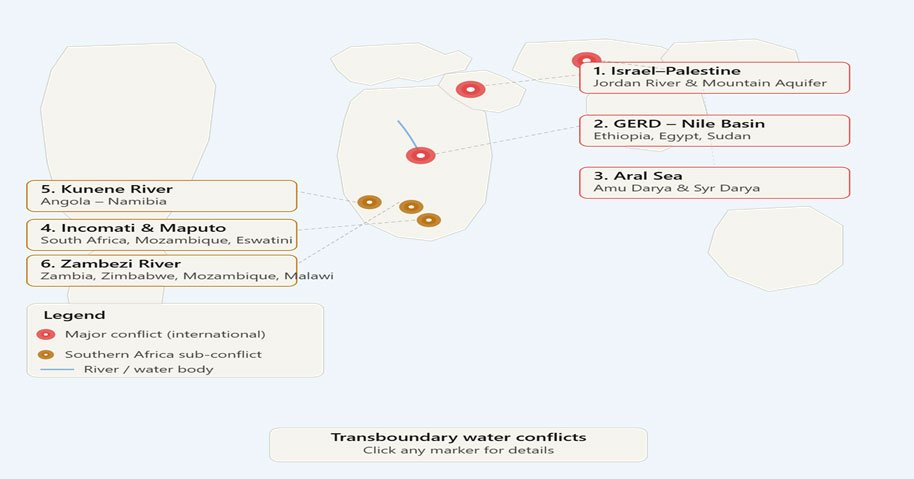
Figure 3.5.3: Water Conflict Zones diagram. The map was generated by Dr. Nusrat Yaqoob. Data: Natural Earth. (2024). https://www.naturalearthdata.com
The map provided above in the Figure shows all six conflict zones from your text, grouped by severity and region. The red markers indicate the three major international conflicts. The Israel–Palestine water dispute, the GERD–Nile Basin tension, and the Aral Sea disaster — while the amber markers cluster Southern Africa's three sub-conflicts (Incomati–Maputo, Kunene, and Zambezi).
3.5.4. Conflict Resolution and Cooperative Strategies
Managing transboundary water conflicts effectively requires moving beyond rigid legalities and looking at shared human and ecological realities of a connected river basin. Over time, a diverse toolkit of diplomatic, legal, and institutional strategies has evolved to balance competing national interests with the baseline need for sustainable water use. These strategies aim to balance the interests of riparian states while ensuring sustainable water use. (Salman & Uprety, 2002).
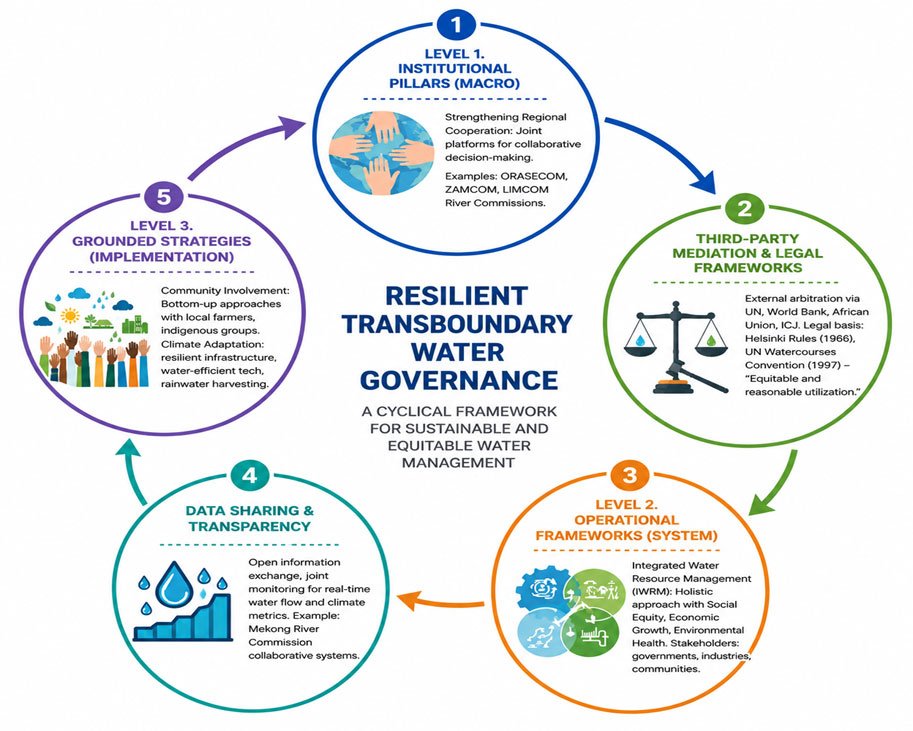
Figure 3.5.4: Real-World Approaches to Transboundary Water Conflict Resolution Strategies. Source: Bernauer & Böhmelt, 2020; Schmeier (2013).
3.5.4.1. Strengthening Regional Cooperation
True water security relies heavily on building and reinforcing resilient, regional water governance institutions that give riparian states a reliable space to talk, negotiate, and plan. Excellent examples of this in action include:
- ORASECOM (Orange-Senqu River Commission in Southern Africa)
- ZAMCOM (Zambezi Watercourse Commission)
- LIMCOM (Limpopo Watercourse Commission)
By investing in and empowering these joint platforms, neighboring countries can shift away from unilateral planning toward collaborative, shared decision-making that defuses geopolitical tensions before they escalate.
3.5.4.2. Integrated Water Resource Management (IWRM)
Instead of managing water in silos, IWRM treats water governance as a holistic system by constantly weighing social equity, economic growth, and environmental health together. This strategy brings everyone to the table—from central governments and major industries to local communities. By keeping stakeholders connected, IWRM helps optimize resource allocation, prevents destructive over-extraction, and mitigates conflicts by making equitable distribution the baseline standard.
3.5.4.3. Third-Party Mediation and Legal Frameworks
When bilateral talks stall, bringing in neutral international actors—such as the United Nations (UN), the World Bank, the African Union (AU), or the International Court of Justice (ICJ)—can offer the diplomatic breakthrough needed to establish binding, durable agreements. These efforts are grounded in foundational international guidelines like the Helsinki Rules (1966) and the UN Watercourses Convention (1997). These legal instruments establish the ground rules for "equitable and reasonable utilization," providing a structured path for resolution through structured arbitration and focused diplomacy.
- Data Sharing and Transparency
A primary trigger for water disputes is simply a lack of trust in numbers, often caused by withheld or unreliable hydrological data. Setting up joint monitoring systems to share real-time water flow measurements and climate data is one of the fastest ways to build mutual trust. The Mekong River Commission is a prime example of how open information exchange between neighboring nations can replace political suspicion with objective, data-driven cooperation and collaborative science. - Community Involvement and Stakeholder Engagement
While water treaties are signed by diplomats, the people most intensely affected by water scarcity are local farmers, indigenous groups, and frontline communities. High-level diplomatic efforts often fail if they lack a connection to grounded community realities. Incorporating inclusive, bottom-up approaches—such as community-led water conservation and participatory governance—ensures that agreements are fair, realistic, and built to last. - Climate Change Adaptation Strategies
Climate change is rapidly rewriting hydrology, making traditional, rigid water-sharing quotas highly unpredictable. Modern transboundary management must integrate climate adaptation directly into its framework. This means collaborating regionally on water-efficient technologies, building climate-resilient infrastructure, and investing in alternative options like rainwater harvesting or localized desalination. When countries co-manage climate risks, they naturally reduce their vulnerable dependency on contested river flows while strengthening broader diplomatic ties. Ultimately, transboundary water conflicts persist not because we lack treaties, but because of underlying power imbalances, political friction, and weak enforcement. Managing shared rivers peacefully requires shifting away from seeing water as a competitive, zero-sum commodity. By prioritizing transparent data, inclusive community engagement, and climate-resilient regional institutions, shared water systems can transition from sources of geopolitical friction into bridges for regional stability.
3.5.5. Special Session (Discussion):
3.5.5.1. Experience Sharing Session with Dr. Lameck Mwewa
Transboundary Water Conflict Analysis (60 mins) session with Dr. Lameck Mwewa, Former Southern African Science Service Centre for Climate Change and Adaptive Land Management (SASSCAL) fellow.
The discussion will be centered around Introduction to Hydro Politics: Conflict vs. cooperation in shared basins with reference to the Zambezi Basin: Multi-country water-sharing challenges.
3.5.5.2. Session Structure and Activities
1. Welcome and Introduction (5 mins)
- Brief introduction by the session moderator.
- Introduction of Dr. Lameck Mwewa, highlighting his expertise in climate change and transboundary water governance.
- Overview of session objectives and structure.
2. Understanding Hydro politics: Conflict vs. Cooperation (10 mins)
- Definition of hydropolitics and its relevance in transboundary water management.
- Explanation of factors influencing conflict vs. cooperation in shared water basins:
- Geopolitical tensions
- Climate change and variability
- Population growth and demand
- Governance structures
- Economic dependencies
3. Case Study: The Zambezi Basin - Multi-Country Water-Sharing Challenges (15 mins)
- Introduction to the Zambezi River Basin:
- Spanning 8 countries (Angola, Botswana, Malawi, Mozambique, Namibia, Tanzania, Zambia, Zimbabwe).
- Importance of the basin for hydropower, irrigation, drinking water, and biodiversity.
- Key conflicts and cooperation issues:
- Hydropower dams (e.g., Kariba Dam, Cahora Bassa Dam).
- Water allocation disputes among upstream and downstream nations.
- Competing demands: agriculture, industry, domestic use, and environmental conservation.
- Role of regional water-sharing agreements (ZAMCOM, SADC Water Protocol).
- Emerging threats:
- Climate change impacts on water availability.
- Increasing droughts and floods.
- Water pollution and ecosystem degradation.
4. Interactive Discussion: Challenges and Solutions (20 mins)
- Open Forum Discussion facilitated by Dr. Mwewa:
- Participants’ perspectives:
- Participants’ perspectives:
- Are existing water-sharing agreements effective? What needs improvement?
Breakout Activity (if time allows):
- Participants form small groups (or online discussion teams).
- Each group discusses a specific Zambezi Basin challenge and proposes solutions.
- Groups share key points in a plenary discussion.
Expert Input from Dr. Mwewa:
- Lessons from successful water cooperation (e.g., Orange-Senqu River Commission, Mekong River Commission).
- The role of science, technology, and data-sharing in improving water governance.
- Recommendations for policymakers and regional organizations.
5. Conclusion and Key Takeaways (10 mins)
- Summary of key insights from the session.
- Summary of key insights from the session.
- Q&A session for any remaining questions.
- Closing by the session moderator.
References
Bernauer, T., & Böhmelt, T. (2020). International conflict and cooperation over freshwater
resources. Nature Sustainability, 3(5), 350–356. https://doi.org/10.1038/s41893-020-0479-8
Hundley, N., Jr. (2009). Water and the West: The Colorado River Compact and the politics of
water in the American West (2nd ed.). University of California Press. https://doi.org/10.1525/9780520943544
International Law Association. (1966). Helsinki rules on the uses of the waters of international
Mekong River Commission. (1995). Agreement on the cooperation for the sustainable
development of the Mekong River Basin. https://www.mrcmekong.org/wp-content/uploads/2024/08/The-Mekong-Agreement.pdf
Micklin, P. (2007). The Aral Sea disaster. Annual Review of Earth and Planetary Sciences, 35(1),
47–72. https://doi.org/10.1146/annurev.earth.35.031306.140120
Natural Earth. (2024). Natural Earth: Free vector and raster map data (Version 5.1.2).
https://www.naturalearthdata.com
Rieu-Clarke, A. (2025). Implementing Transboundary Water Agreements. Edward Elgar
Publishing. https://doi.org/10.4337/9781035337279.
Salman, S. M. A., & Uprety, K. (2002). Conflict and cooperation on South Asia's international
rivers: A legal perspective. World Bank. https://doi.org/10.1596/0-8213-5352-9
Schmeier, S. (2013). Governing international watercourses: River basin organizations and the
sustainable governance of internationally shared rivers and lakes. Routledge. https://doi.org/10.4324/9780203096222
Waterbury, J. (2002). The Nile Basin: National determinants of collective action. Yale University
Press. https://yalebooks.yale.edu/book/9780300090505/nile-basin
Wolf, A. T. (1999). Water and human security. AVISO: An Information Bulletin on Global
Environmental Change and Human Security, (3). https://transboundarywaters.ceoas.oregonstate.edu/sites/transboundarywaters.ceoas.oregonstate.edu/files/Wolf%20UPDATE%20CV_Website%20202003.pdf
Yihdego, Z., Rieu-Clarke, A., & Cascão, A. E. (Eds.). (2017). The Grand Ethiopian Renaissance
Dam and the Nile Basin: Implications for transboundary water cooperation. Routledge. https://doi.org/10.4324/9781315160122
Zeitoun, M. (2008). Power and water in the Middle East: The hidden politics of the Palestinian-
Israeli water conflict. I.B. Tauris. https://doi.org/10.5040/9780755609314
Bibliography
International Law Association. (1966). Helsinki rules on the uses of the waters of international rivers. ILA.
Nile Basin Initiative. (1999). Nile Basin Initiative framework. NBI Secretariat.
https://www.nilebasin.org/index.php/nbi/nbi-background
Governments of Botswana, Lesotho, Namibia, & South Africa. (2000, November 3). Agreement on the
establishment of the Orange-Senqu River Commission (ORASECOM). ORASECOM. https://orasecom.org/regional-and-international-agreements-2/
Governments of Botswana, Mozambique, South Africa, & Zimbabwe. (2003, November 27). Agreement
on the establishment of the Limpopo Watercourse Commission (LIMCOM). LIMCOM. https://limpopocommission.org/the-basin/governance/water-governance-in-the-limpopo-basin/limcom-agreement/
Governments of Angola, Botswana, Malawi, Mozambique, Namibia, Tanzania, & Zimbabwe. (2004).
Agreement on the establishment of the Zambezi Watercourse Commission (ZAMCOM) (entered into force June 19, 2011). ZAMCOM. https://zambezicommission.org/publication/zamcom-agreement
Government of India, Government of Pakistan, & International Bank for Reconstruction and Development.
(1960, September 19). The Indus Waters Treaty 1960 (UN Treaty Series No. 6032). United Nations. https://treaties.un.org/doc/Publication/UNTS/Volume%20419/volume-419-I-6032-English.pdf
Colorado River Commission. (1922, November 24). Colorado River compact. U.S. Bureau of Reclamation.
https://www.usbr.gov/lc/region/g1000/pdfiles/crcompct.pdf
Governments of Cambodia, Lao PDR, Thailand, & Vietnam. (1995, April 5). Agreement on the cooperation
for the sustainable development of the Mekong River Basin. Mekong River Commission. https://www.mrcmekong.org/wp-content/uploads/2024/08/The-Mekong-Agreement.pdf